The Anchor Dish Doctrine: Shared Suppers Without Fridge Jenga
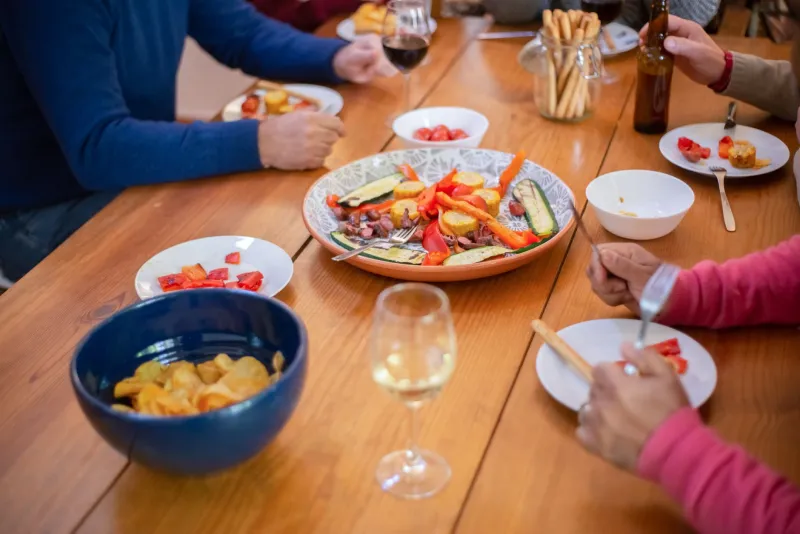
There is a particular kind of UK party horror story that begins with the words, 'just bring a plate.' By 7pm, the table is groaning with six versions of pasta salad, someone has brought a whole watermelon with no knife, and the host is trying to fit three tubs of hummus around the milk. Shared suppers are a lovely idea. They are also a small logistics project wearing a party hat.
The fix is not to abandon the bring-a-plate format. It is to give it a bit of structure. In 2026, with budgets tighter and calendars fuller, a shared supper is one of the most realistic ways to gather people without turning the host into a caterer. The trick is a simple pact: the host provides an anchor dish and drinks, guests claim the rest through a group chat, and everyone knows exactly what they are bringing before they leave the house.
The anchor dish is the host's real job
A shared supper works best when the host is not trying to make everything. Choose one big, forgiving anchor dish that can feed the table and hold its own if someone arrives late or brings an extra guest. Think slow-cooked chilli, a traybake of roast chicken and vegetables, a big veggie curry, a lasagne, or a baked pasta that can sit in the oven while people arrive.
The anchor should be reheatable, easy to serve and not fussy about timing. It is the safety net. If the sides are slow to appear, the anchor keeps everyone fed. If a guest has dietary needs, the anchor can be kept simple and clearly labelled, with the more complicated dishes on the side.
The host also owns the boring infrastructure: plates, cutlery, napkins, serving spoons, bin bags, tea and coffee. That is not a small contribution. It is the reason the party does not collapse into a stack of paper plates and a hunt for a bottle opener.
Turn the group chat into a kitchen rota
The group chat is where the bring-a-plate pact lives or dies. Do not ask, 'Can you bring something?' That invites chaos. Ask people to claim a specific slot: cold side, warm side, pudding, extras. Pin the list. If you are using a spreadsheet, even better, but a pinned message in the chat is usually enough.
Be clear about quantities. 'One dish that serves six to eight' is a useful instruction. 'Something for the table' is not. Ask guests to label their dish with ingredients, especially if there are allergies or strong preferences in the group. A small card or strip of masking tape with the dish name and key ingredients saves a lot of hovering and questioning.
The first person to claim a slot gets it. The second person who offers the same thing becomes the backup or gets gently redirected to drinks, bread or pudding. This is not being bossy. It is being kind to the person who would otherwise arrive with the seventh bowl of pasta.
Avoid the six-pasta-salad problem
Variety does not happen by accident. It happens when you ask for categories rather than dishes. Nudge guests towards something green, something starchy, something tangy and something sweet. A loose theme helps, too: comfort food, Mediterranean-ish, a baked potato bar, or a 'whatever you love' table. But keep it loose enough that people can bring what they are good at.
If someone is set on pasta salad, let them bring it. Just ask them to make it the best version they can and to bring a serving spoon. The goal is not to police the menu. The goal is to make sure the table has a bit of balance and nobody feels like they have failed at partying.
Fridge Jenga is a planning issue
Fridge space is the quiet killer of shared suppers. Clear the fridge the day before. Move the condiments to the door, take out anything that does not need to be there, and designate shelves. Ask guests to bring cool bags or cool boxes if they are bringing anything that needs chilling. In a UK November, a cold garage or conservatory can help, but keep food covered and do not leave dairy sitting out for hours.
Set up a drinks station away from the food so people are not opening the fridge every time they want a glass of something. Use cool boxes for drinks and keep the fridge for dishes that genuinely need it. Label shelves if you are feeling organised: savoury, sweet, drinks. It sounds over the top. It also stops someone putting a warm quiche on top of the birthday cake.
Keep the guest list useful, not freeloading
A shared supper is not about getting your friends to subsidise your party. It is about sharing the effort. Be explicit in the invitation: the host provides the anchor dish, drinks and basics; guests bring one dish to share and whatever they would like to drink. If someone cannot cook, give them a useful job: ice, bread, napkins, a playlist, or washing-up duty.
That last one matters. The person who stays behind to help with the washing up is not a lesser guest. They are part of the pact. Shared suppers work when everyone feels useful rather than taxed. A guest who brings a brilliant loaf of bread and a bottle of something cold has done their bit.
The shared supper is a story machine
There is a reason shared suppers linger in the memory. Everyone has a contribution to talk about. The person who brought the burnt aubergine has a story. The person who made their nan's pudding has a story. The host who kept the chilli warm and the fridge under control has a story, even if it is mostly about the fridge.
In 2026, the best parties are often the ones that ask a little from everyone and a lot from no one. A bring-a-plate pact, done with a clear group chat and an anchor dish, is warm, realistic and genuinely fun. It gets the host out of the kitchen and gives the table something better than six identical salads: a proper shared supper with plenty to talk about.
Invitation wording that works: 'I'll do a big chilli and drinks. Please claim a cold side, warm side, pud or extra in the chat, and bring one dish that serves six to eight. Label allergens if you can. Can't cook? Bring ice, bread or washing-up energy.' Simple, friendly, and nobody has to play fridge Jenga at midnight.