Three Generations, One Speaker: How to Build a Family Party Playlist That Actually Works
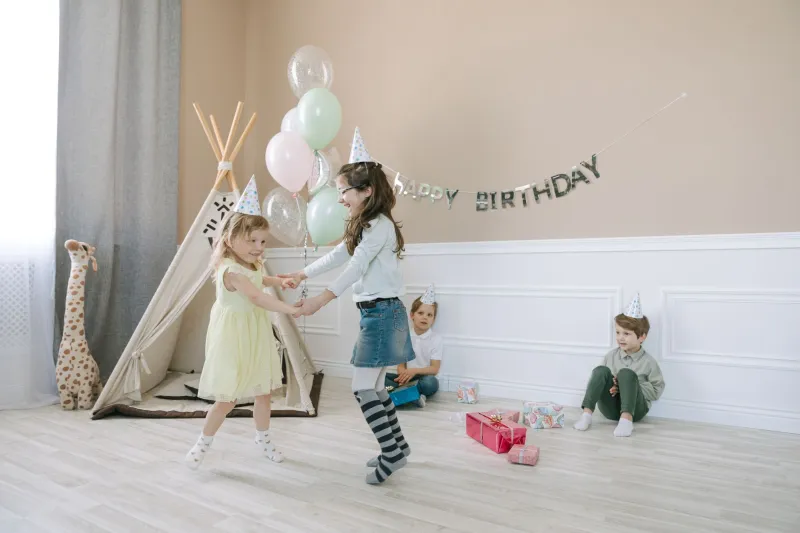
Every family party has an invisible guest: the playlist. Get it right and the room hums. Get it wrong and you'll spend the night watching someone's uncle stab at the speaker with his phone while a toddler has a meltdown to a song about taxes. The good news is that a cross-generational playlist isn't about pleasing everyone. It's about building chapters that give everyone a turn.
The three-generation test
Think of your guests as three loose camps. The little ones want short, bright songs with choruses they can roar. The middle generation wants nostalgia with a beat — the songs they danced to at weddings, sixth-form discos and kitchen parties. The older guests want melody, lyrics and a volume that lets them hear each other. No single song will satisfy all three for long, which is why you need a sequence rather than a shuffle.
Sequence the night in chapters
Start low-key. Arrival music should be background, not a concert: soul, gentle pop, a bit of jazz. Think 60 to 90 beats per minute, and nothing that demands a singalong before people have taken their coats off. When the food comes out, keep it conversational. This is not the time for a bassline that rattles the windows.
Then comes the kids' slot. Fifteen minutes, maximum. Toddler floor-fillers are brilliant but they have a half-life. Pick three or four familiar bangers, get the little ones moving, then hand the room back to the adults before the parents start eyeing the door. After that, build towards the 'everyone knows this' set. This is where UK crowd-pleasers earn their keep: Mr Blue Sky, Dancing Queen, Come On Eileen, Valerie, September, Sweet Caroline. Play them with confidence and don't apologise for the cheese.
Give the older guests their golden hour. That's when the volume comes down a notch and the songs get warmer: Frank Sinatra, The Beatles, Bobby Darin, a bit of Motown. You're not killing the party; you're changing gear. Finish with something that sends people home happy rather than sobbing into a paper plate.
UK crowd-pleasers that cross the divide
You don't need a perfect list, but you do need a few bankers. Mr Blue Sky by ELO is almost impossible to dislike. ABBA works across generations, as does Earth, Wind and Fire. Amy Winehouse and Mark Ronson's Valerie gets a room singing. Queen, The Beatles and Elton John are safe ground. For the kids, pick one Disney anthem and one novelty song, then stop. Two novelty songs is a party; five is a hostage situation.
If you want a genuinely British flavour, add a bit of Britpop for the middle generation and a classic singalong for the end. Just don't play the same three songs on repeat because you panicked. Variety is what keeps a mixed room in the room.
Volume politics
The volume is the most political thing in the house. Too quiet and the party feels like a wake. Too loud and the older guests leave early with a headache. Put the speaker on a solid surface, not a glass table, and not next to anyone who might want to talk. In a small room, one speaker is plenty. Set a maximum volume before guests arrive and stick to it. If people are shouting to be heard, it's too loud. If they're whispering, it's too quiet.
Create a quiet corner if you can — a sofa away from the speaker, a kitchen table where the conversation can breathe. A party with one volume setting is a party that only suits one age group.
How to stop one guest hijacking the speaker
There's always one. They arrive with a phone full of deep cuts and a strong opinion about what the room needs. The trick is to give them a job without giving them the aux. Make a collaborative playlist in advance and invite requests, but keep the queue curated. Put a QR code on the wall so people can add songs rather than grab the cable. If someone is desperate to DJ, give them a 20-minute guest slot after the cake. It scratches the itch and contains the damage.
Have a non-negotiable rule: requests are welcome, skipping is not. Nothing kills a dance floor faster than a phone warrior cutting off the chorus. If all else fails, use the classic: 'We're saving that one for the finale.' Then actually save it.
The last song matters
End on purpose. A big, warm, everyone-in-the-room song is better than a random track that happens to be next in the queue. You want people to leave with a tune in their head and a vague feeling that they should do this more often. Lights up, coats on, one last chorus. That's the job.
A good family playlist isn't democratic. It's generous. It gives each generation a turn, keeps the volume humane and stops one person from turning the speaker into a personal soapbox. Build it in chapters, protect the queue and let the room tell you what it needs. The best soundtrack is the one nobody notices until everyone is dancing.