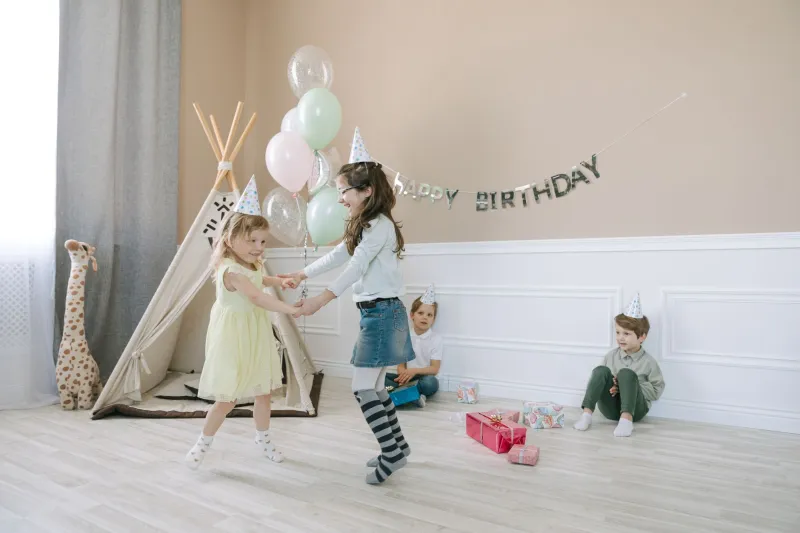
The Low-Hum Host: Planning a 2026 Party That Leaves Room to Breathe
Most party advice starts with the same assumption: bigger, louder, later. More speakers, more surprises, more people crammed into the kitchen. But if you have ever watched a guest quietly disappear halfway through the evening — or spent the last hour of your own party trying to find them — you already know that a good celebration is not measured by volume. In 2026, the smartest hosts are designing parties with a bit more care and a lot less chaos. That does not mean hiring a sensory consultant or turning your living room into a clinic. It means thinking about how the evening feels from the edge of the room, not just from the middle of the dance floor.
An invitation that tells the truth
A vague invite is a small act of cruelty. Join us for drinks and nibbles sounds lovely, but it leaves a neurodivergent guest guessing: How many people? Is there a seating plan? Will there be speeches? What time does it actually end? Will I be able to hear anyone? The fix is simple. Put the practical details in the invitation, not in a follow-up message that gets lost in a group chat. Include the date, the arrival window, the rough number of guests, whether food will be served and when, whether children will be there, and the expected finish time. Mention noise levels if you can — a buffet and background playlist is very different from a live band and a microphone.
Ask about access needs privately when people RSVP. A simple line works: If there is anything that would make the party easier for you, just let me know. It gives people permission to ask without making them explain themselves in front of everyone. And if you are sending paper invites, add a phone number or email for questions. The goal is not to create a form to fill in. It is to remove the guesswork.
Build a quiet corner that is not a naughty step
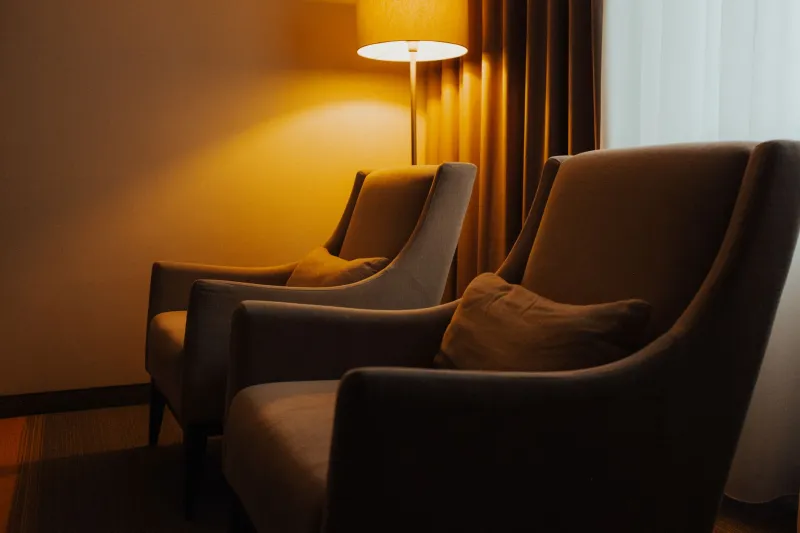
Every party needs a place to land. Not a bedroom with the coats piled on the bed — a proper, comfortable corner where the volume drops and nobody has to perform. In a house, that might be a spare room, a conservatory, or a bench at the end of the garden. In a village hall, it could be the small side room that usually stores the trestle tables. Wherever it is, make it obvious without making it a spectacle. A small handwritten sign saying quiet room, or a simple arrow, is enough. Stock it with a lamp instead of an overhead light, a few cushions, a jug of water, and maybe a puzzle or a stack of magazines. No music. No flashing lights. No one asking why you are in there.
The language matters. Do not call it the calm-down room for people who are struggling. Call it the quiet room, full stop. Frame it as somewhere anyone can use — the uncle with a headache, the friend who needs five minutes away from the buffet queue, the toddler who has hit the wall. When a space is genuinely open to everyone, no one has to out themselves to use it.
Turn the volume down before anyone asks
You do not have to ban music to make a party sensory-friendly. You just have to be deliberate about sound. Keep the playlist at a background level rather than a conversation-killer. Put the speakers away from seating areas. Skip the games that rely on sudden noise — popping balloons, buzzers, a microphone passed around for speeches. If you are hiring a band or DJ, tell them the room has hard floors and ask them to bring a sound limiter or keep the bass low. It is not about making the party boring. It is about making the party comfortable enough that people stay.
Lighting is the other easy win. Avoid strobes, flickering fairy lights, and bare bulbs at eye level. Lamps, candles in jars, and warm white strings are softer and look better anyway. Be careful with strong scents, too — plug-ins, scented candles, and heavy air fresheners can be overwhelming in a small room. Open a window if you can. And think about the buffet. Food labels help everyone, not just guests with allergies. A simple card saying what is in each dish, or at least whether it is vegetarian, contains nuts, or is gluten-free, takes the anxiety out of queuing. Keep a few plain, safe options on a separate plate so no one has to negotiate a crowded table.
Give people a runway, not a maze
A party layout should be easy to read. Clear paths between rooms. Chairs that are not blocked in. Exits that are not hidden behind coats or a stack of presents. If you are using a village hall or community centre, walk the route from the front door to the loo and back, and check for bottlenecks. The same goes for arrival. Have someone by the door to say hello, take coats, and point out where the quiet room is and where the drinks are. That two-minute greeting saves a lot of hovering.
And let people leave without a fuss. Do not stand in the doorway for one more photo, or launch into a group speech just as someone is trying to slip out. A guest who leaves at 9pm because they are done is not a failed guest. They are a guest who had a good time and knew when to stop. Make goodbye easy, and they will come back.
Skip the forced fun
Not every party needs a quiz, a game, or an icebreaker. If you do want an activity, make it low-stakes and optional. A doodle table, a jigsaw, a basket of fidget toys, or a simple card game in the quiet room gives people something to do with their hands without putting them on the spot. Avoid anything that asks guests to perform, reveal something personal, or compete in front of a crowd. Neurodivergent guests are not the only ones who hate that. Plenty of people do. You are just making it easier for them to say no.
Why this is a party trend worth keeping
Inclusive hosting is not a niche. It is just good hosting with the volume turned down and the details written down. It helps the guest with autism who needs to know when the food is coming. It helps the friend with ADHD who finds a noisy room impossible to follow. It helps the aunt with a migraine, the dad with hearing aids, the child who needs a break from the crowd. It helps you, too, because a party with clear timings, comfortable seating, and a quiet corner is a party where people actually relax.
So before you plan the next one, ask yourself a simple question: is there room in this celebration for someone who does not want to shout? If the answer is yes, you are already ahead of the trend. If the answer is no, you have got a few weeks to move a sofa and turn the music down. That is not less fun. It is just a better party.