One Name on the Envelope: A 2026 Guide to Plus-Ones, Children and Hopeful Maybes
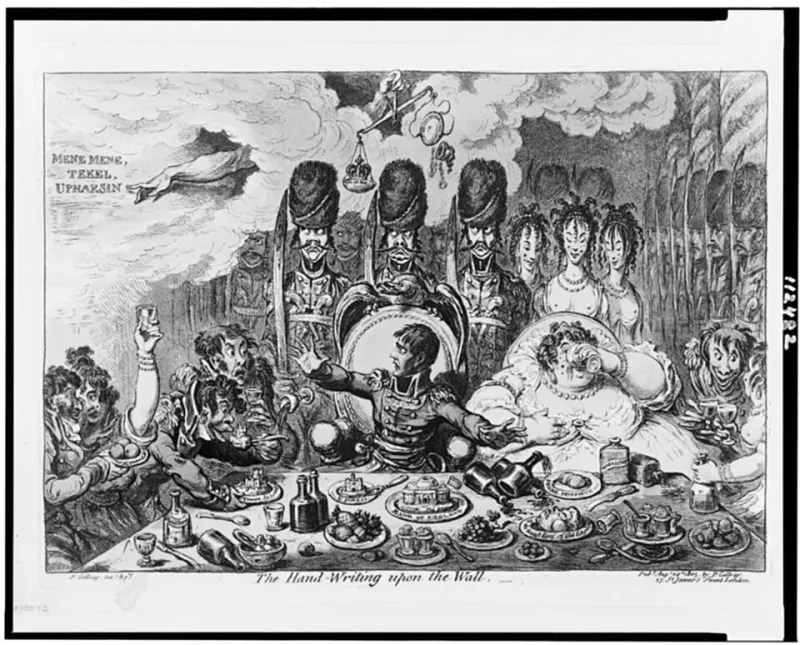
Photo: British Cartoon Prints Collection, Public domain, via Wikimedia Commons
Right, let’s talk about the bit of party planning that never makes the pretty mood board: the guest list. In 2026, with venues charging by the head and dining tables measured in centimetres, the plus-one question has become a proper host headache. You want a full room, not a squashed one. You want people to feel wanted, not managed. And you really do not want to spend the week before the party refereeing a WhatsApp group that has quietly turned into a negotiation.
The good news is that boundaries can be kind. They only feel awkward when they arrive late, vaguely, or as a surprise. Decide your guest-list shape early, say it clearly, and most people will meet you with good grace. Here is how to do it without turning into the invitation police.
Start with the shape of the room, not the shape of the guest list
Before you write a single invite, work out three numbers: how many people your space can hold comfortably, how many your budget can feed properly, and how much hosting energy you actually have. That third one is the one hosts forget. An 18-seat table does not become a 22-seat table just because everyone is lovely.
Write your rule down. For example: ‘This is a 20-person supper, adults only, no additional plus-ones.’ That sentence is for you, not for the invite. It stops you making panicked exceptions at 11pm when a mate asks if their cousin can come.
The three-door RSVP system
Keep the reply options brutally simple. A free online form, a paper slip or a direct message all work, as long as the choices are clear:
- Yes, just me.
- Yes, with the plus-one named on my invitation.
- Sadly, I cannot make it.
If you are not offering plus-ones at all, the first door is the only yes. That is not rude; it is just clear. Add a reply-by date and a line about final numbers. Something like: ‘I am locking the list on Friday 6 March, so please reply by then so I can sort seating and food.’
Avoid adding ‘maybe’ as an option. Maybe is not a guest-list category. It is a holding pattern that makes everyone anxious.
Wording for invites that does not sound like a bouncer
You do not need a paragraph of justification. A short, warm sentence does the job:
We are keeping this one small, so this invitation is for you only. I really hope you can still make it.
For a party where plus-ones are offered but named:
This invite is for you and Sam. We are at capacity, so please do not bring anyone else without checking with me first.
For a children’s party:
This invitation is for [child’s name] and one adult. We are limited on space, so we cannot accommodate siblings this time.
If that feels too formal for your crowd, soften the edges but keep the fact: ‘Tiny flat, big love, strictly one seat per invite.’ Clear is kind. Vague is where resentment grows.
When someone asks for a plus-one
It will happen. Someone will text: ‘Can I bring my new partner?’ or ‘My sister is staying that weekend — can she tag along?’ The trick is to answer quickly, warmly and once. Do not offer a rambling explanation about budget, seating plans and your aunt’s dietary requirements. Acknowledge, answer, redirect.
Thanks for asking. I checked the list and we are full at the moment, so I cannot add anyone else. I would still love you there if you can make it.
If you genuinely might have a spare seat later, say that without promising:
We are at capacity right now. If a seat opens up, I will let you know first.
And if the person is coming alone and will not know many people, help them land. Tell them who else is coming, introduce them by message beforehand, or ask a friendly guest to keep an eye out at arrival. A plus-one is often a comfort blanket. If you cannot offer the blanket, offer a warm welcome instead.
Children, babies and the half-term question
Be explicit about children in the invite, even if it feels obvious to you. ‘Adults-only evening’ is clear. ‘Family party’ is not. If babies in arms are welcome, say so. If they are not, say that too.
This one is a grown-ups’ evening, I am afraid. I would love you there, but we are not able to include children.
For a family do where space is tight:
We are only able to host the children named on the invitation because of numbers. I hope that makes sense, and I am sorry if it is disappointing.
One important exception: a carer, support worker or assistance dog is not a plus-one. If a guest needs support to attend, build that into your plan from the start. Kind boundaries should not push accessibility out of the room.
The group chat is not an RSVP system
Group chats are brilliant for jokes and terrible for numbers. Do not ask ‘Who is coming then?’ in a 14-person thread unless you enjoy chaos. Send invitations individually, or use a form, and keep the list in one place.
If the group chat starts adding people on your behalf, move it to a private message:
Just keeping the numbers straight — invites are individual this time. If you need to bring someone, message me and I will see what is possible, but I cannot promise a spare seat.
That last clause matters. ‘See what is possible’ is not a yes. It is a polite maybe with a locked door at the end.
Lock the list, then let it go
Five days before the party, send a short reminder to anyone who has not replied:
Hello! I am locking numbers on Wednesday, so if I do not hear from you by then I will mark you down as a no. No pressure either way — I just need to sort the food.
Then actually lock it. Print the list, close the spreadsheet, and stop renegotiating with yourself. A guest list is not a moral test. It is a plan for a room.
At DF Party, the rule we keep coming back to is simple: a clear no is kinder than a fuzzy yes that collapses later. Say what you can offer, say it early, and make the welcome warm enough that the boundaries feel like care rather than exclusion. That is how you get a party that fits the people in it — and a host who can actually enjoy the doorbell.